Disney’s OpenAI Partnership Reveals the Missing Layer in Generative AI: Enforcement
December 15, 2025


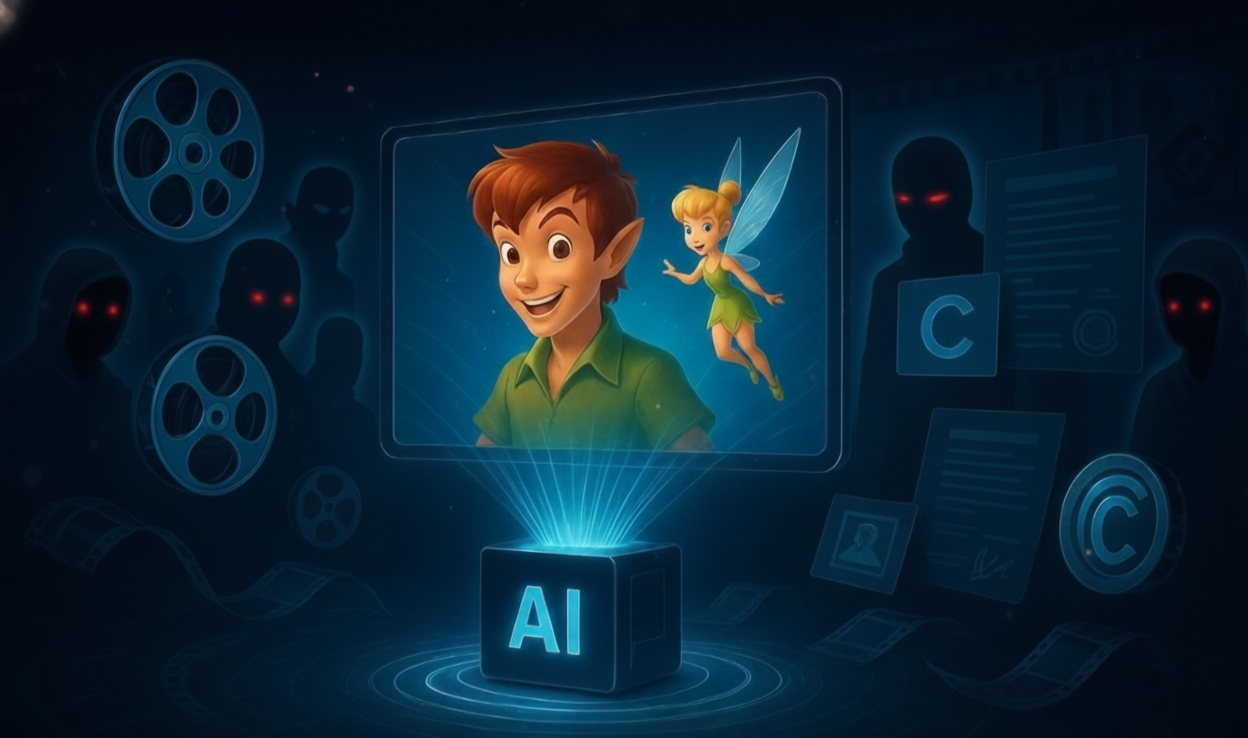


Disney’s $1 billion dollar investment in OpenAI and decision to license more than 200 characters to Sora, marks a consequential inflection point for the entertainment industry and generative media. Under the three year agreement, Disney becomes Sora’s first major content licensing partner, granting access to characters from Disney, Marvel, Pixar, and Star Wars while explicitly excluding talent likenesses and voices, with the feature expected to launch in early 2026.
Much of the early coverage has focused on whether the partnership ultimately benefits or disadvantages Disney, framing the deal as a question of leverage, optics, or competitive positioning. The more consequential issue, however, is whether generative AI economics can function at scale without undermining the scarcity that gives intellectual property its enduring value.
For decades, Disney has treated intellectual property as a tightly controlled asset, carefully governing how characters, worlds, and stories are licensed, adapted, and distributed across mediums. A decision by one of the most protective IP owners in the world to engage this deeply with a generative video platform signals a recognition that unauthorized use is no longer a marginal risk, but an inevitable feature of a generative ecosystem.
In that context, control and monetization become the only viable options.
By investing in OpenAI while licensing its characters, Disney secures a strategic seat at the table. Both companies have age-appropriate policies and robust controls to prevent illegal or harmful content, giving Disney influence over how its IP is handled within Sora.
What remains unclear is how far those controls extend. What enforcement tools will Disney actually have? How will misuse be detected at scale? Who monitors millions of user-generated videos? And what happens once that content leaves Sora?
These questions are not theoretical. Sora has already faced copyright backlash, including criticism from the Motion Picture Association and broader concerns from talent groups and creators about how generative systems handle protected works. By the time licensed Disney content becomes widely available in early 2026, it is likely to circulate rapidly across the internet, outpacing the operational safeguards intended to govern its use.
Guardrails are necessary, but they are fundamentally incomplete. No generative AI company can police what happens once content leaves its ecosystem. The moment a video is generated and downloaded, enforcement becomes a downstream problem.
Content can be reposted, remixed, monetized, and distributed across social platforms, marketplaces, and private channels entirely outside OpenAI or Disney. Even the most thoughtfully designed guardrails cannot prevent this.
As volume increases, so does exposure. High quality AI generated Disney content can compete with official releases, place characters in contexts that undermine brand integrity, and blur the distinction between fan expression, infringement, and market substitution in ways that are difficult to unwind after the fact.
This challenge is fundamentally one of enforcement rather than moderation.
If rights holders and talent want assurances rather than contractual comfort, guardrails must be paired with continuous detection, monitoring, enforcement, and attribution across the open internet.
Preserving economic scarcity in a generative world requires more than permissions at creation. It requires the ability to detect licensed and unlicensed uses wherever they appear, enforce rules after content is distributed, attribute usage accurately, and act quickly when content crosses from permitted use into misuse.
Without this layer, licensing risks legitimizing scale without preserving value.
This distinction is crucial as lawmakers turn their attention to AI and likeness rights. Proposed frameworks like the No FAKES Act reflect that consent alone is not enough. Rights need to be enforceable in practice, not just on paper. As regulation moves from theoretical frameworks toward implementation, the ability to detect and remediate misuse across platforms will become foundational infrastructure rather than a competitive advantage.
Disney’s move may prove a blueprint for responsible AI, but only if it catalyzes a broader shift in how rights are protected.
As more studios, labels, and talent owners enter licensing agreements with generative platforms, three elements should be non-negotiable.
This level of enforcement cannot be delivered by any single AI company acting alone.
The technology is ready. The characters are coming. The licensing floodgates are opening.
What remains unproven is whether these economics can function without ecosystem-wide enforcement capable of preserving both scarcity and trust. Without it, even the most sophisticated licensing deals risk becoming costly experiments that trade short-term access for long-term erosion of value.
Disney’s bet may ultimately prove to be visionary, or it may expose a more difficult truth. Permission without policing does not amount to protection, and access without enforcement cannot sustain creative economies at scale.
The next phase of generative AI will be decided not by who grants access first, but by who builds the infrastructure that makes access sustainable.
.png)